
Can Bleach Remove Mould?
- Written By Restoration Pros
- Last Updated September 25, 2026
There’s no short answer to this question. Yes, bleach ‘can’ kill mould, but only on a surface level. It’s more a Band-Aid treatment that removes it – temporarily. Aside from long-term effectiveness, there are also plenty of downsides and risks to using bleach to remove mould, so it’s best to avoid it.
Mould may look unattractive, but it’s not just unsightly, it can also be highly detrimental to your health. Some mould species produce what’s called mycotoxins, which are very toxic to humans and may lead to hay fever-like symptoms, severe respiratory illness and can even inhibit your body’s immune system. That’s why it’s important to get rid of it as soon as you can, and to do the job properly.
Does Bleach Really Kill Mould?
Despite what most people think and years of online articles telling you otherwise, bleach isn’t nearly as effective at killing mould as other cleaning methods. In actual fact, in some situations, it can make things worse. Bleach doesn’t actually kill the mould, it only masks the problem.
Bleach Cleans the Surface, Not the Root
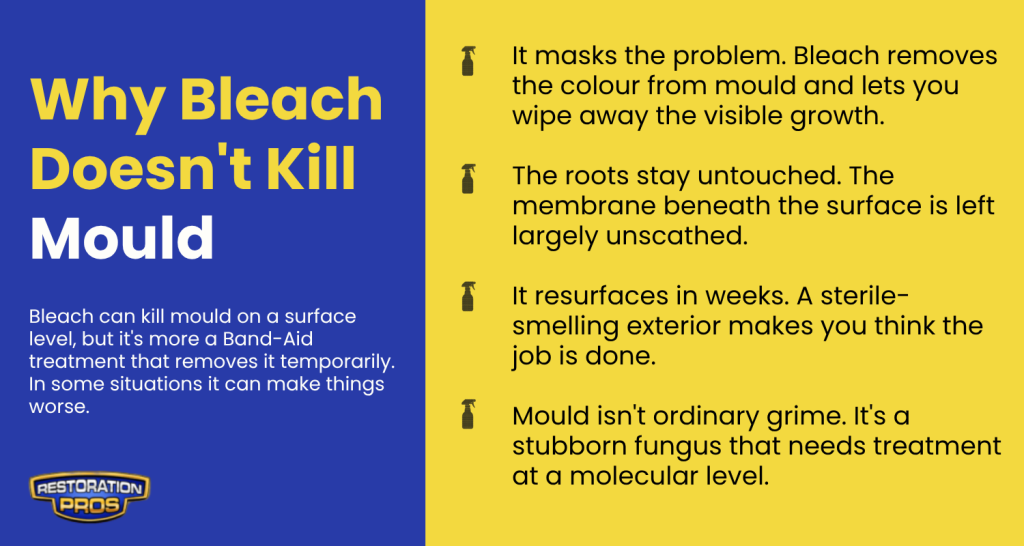
When you see a patch of mould on a wall or your bathroom tiles, it’s only natural to reach for the spray bottle full of bleach. Most of us grew up thinking a squirt of bleach and a wipe gets rid of just about anything – it’s extremely potent, after all. However, mould isn’t just any old bit of dirt or grime. It’s a stubborn, potentially dangerous fungus that requires other treatment at a molecular level to make sure it’s removed properly.
Applying bleach to a surface that contains mould essentially just removes the colour from it and allows you to wipe away the visible growth. You end up with a clean looking and sterile smelling exterior that can easily make you think that the job’s done and you can pat yourself on the back. But what lies beneath the surface largely unscathed are the roots or membrane, and a few weeks later the pesky mould will resurface.
Porous vs Non-Porous Surfaces: Why Results Vary
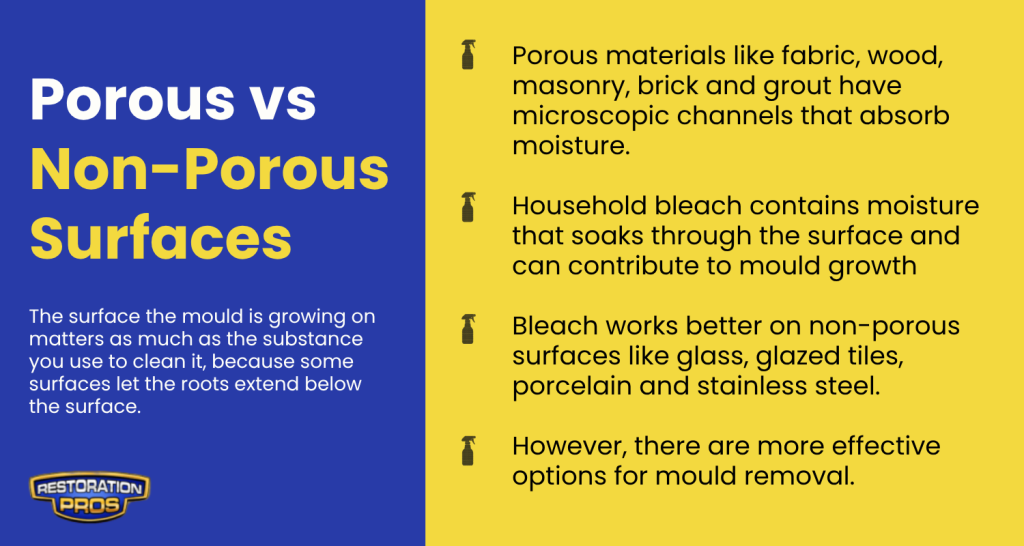
The surface the mould is growing on matters as much as the substance you use to clean it. Why is that you ask? Well, the way mould grows is by extending its roots below the surface on which it’s growing – but some surfaces don’t allow the roots to penetrate.
Porous surfaces are materials that contain tiny, microscopic holes or channels that allow liquids, air, and microscopic particles to seep inside and be absorbed. Fabrics, wood, masonry, natural stone, brick and grout are all examples of common porous materials in a home. Just like how these tiny holes in porous material let moisture in, when mould grows on it the roots extend below the surface too.
Now to the issue with using bleach. Household bleach is largely water, so when you apply it to a porous material it discolours the mould, allows you to wipe it away, but the moisture soaks into the porous surface. The moisture then keeps the mould’s roots alive, and in some cases, helps it to thrive.
A non-porous surface is a solid material, such as glass, with a tightly packed molecular structure that doesn’t allow liquids, air, moisture, or microscopic particles to penetrate or be absorbed.
Other examples of non-porous materials include mirrors, glazed tiles, porcelain, stainless steel and treated stone surfaces. These are all typically stain resistant, hygienic, and when you drip water on them, it forms droplets and is easily wiped away without leaving a mark.
Bleach can be more effective for cleaning surface-level mould on non-porous materials because it doesn’t soak into the surface. But that’s not to say you ‘should’ be using bleach, as there’s better, much safer (and more effective) solutions for mould removal.
The Health and Safety Risks of Bleaching Mould
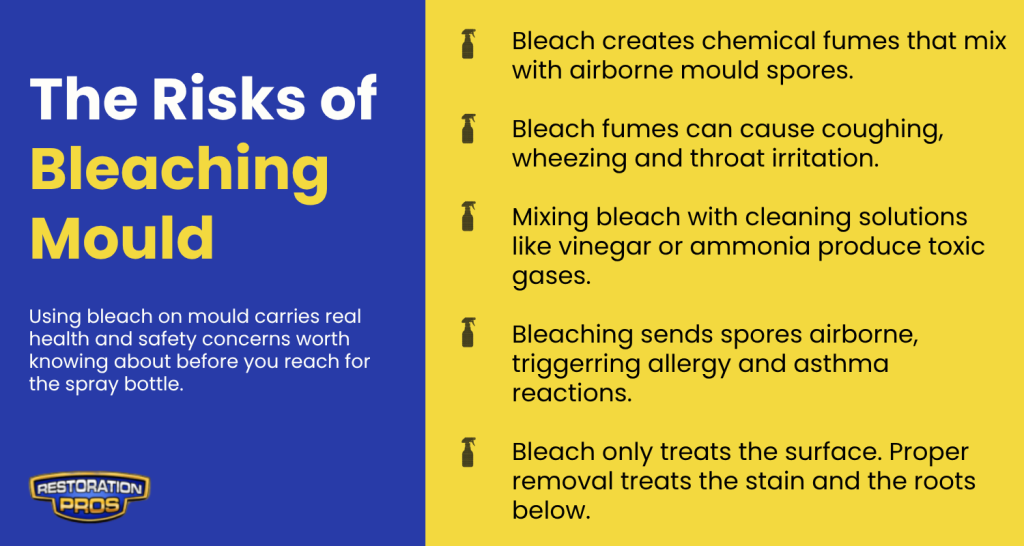
Apart from creating a false sense of security thinking you’ve wiped away the mould, there are other concerns with using bleach as a cleaning agent.
A major issue with using bleach is that spraying it creates aerosols that mix harsh chemical fumes with airborne mould spores, creating a toxic cocktail that can cause coughing, wheezing, throat irritation and other respiratory illness. In more extreme scenarios, mixing bleach with other cleaners, such as vinegar or ammonia, produces deadly chlorine or toxic gases that when inhaled can lead to chemical pneumonia or severe breathing difficulties.
For sufferers of allergies that cause symptoms like skin irritation or rashes, eye irritation or asthma-like issues, by scrubbing mould you send thousands of spores into the air which can trigger reactions in sensitive individuals.
Why Mould Often Returns After Bleach Treatment
Mould often returns after bleach treatment because the bleach essentially acts as a cleaning agent that doesn’t kill the roots of the mould or fix the cause. The bleach gives you a clean looking finish, but beneath the surface lies the membranes of the mould which regrow in the days that follow. What’s more, using bleach may inadvertently add to the problem by increasing the moisture content within porous materials, or producing airborne spores, which both subsequently fuels the growth.
What Actually Works for Removing Mould?
Removing mould isn’t as simple as wiping away the unsightly fungi you see on the surface. To do the job properly you need to kill the surface stain and the roots below, then address the initial cause.
Professional mould removal services are able to do this in a safe and thorough manner. Sure, you can buy commercial quality fungicidal sprays and get good results on non-porous surfaces like ceramic tiles and glass, but for walls, carpet, curtains and other porous materials, it’s not only best, but safest to call the experts to safely contain and remove mould.


Contact Us