
Does Home Insurance Cover Water Damage?
- Written By Restoration Pros
- Last Updated March 24, 2026
While home insurance is not legally required in Australia, it is estimated that somewhere between 80-90% of Australian’s insure their homes – albeit at different levels of cover and with vastly different inclusions.
For most of us, home insurance is there for peace of mind, quietly sitting in the background year after year in the hope that it is never needed. But when something does go wrong – whether that’s from a natural event like a storm or from a burst water pipe or sudden water ingress, having the right level of coverage is essential for protecting your home and your possessions.
In this article, we’ll cover the basics of home insurance and water damage, the factors that impact your eligibility to make a claim, and how to navigate the claims process to ensure you receive your entitlements.
What is water damage?
Water damage is an umbrella term that is used to categorise any loss or damage that occurs to the home or its contents as a result of water exposure.
When most of us think of water damage, we think of a leaking roof. And while roof leaks do account for a large portion of claims made for water damage, they aren’t the only cause. Water damage can occur as the result of blocked drains, burst pipes, leaking pools, appliances failures such as washing machines or dishwashers, or stormwater runoff – just to name a handful.
Does home insurance cover water damage?
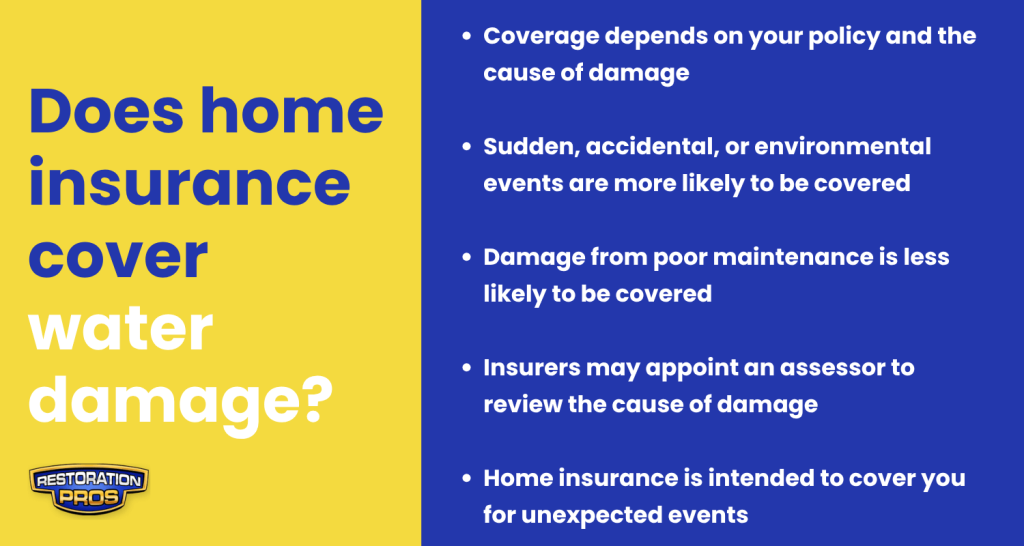
Whether or not water damage is covered by home insurance will depend on two key factors:
1. Your insurance policy:
each policy and the associated level of cover is completely different. Low level home insurance policies may only cover certain types of water damage or may not cover water damage at all. It’s important to refer to your policy when assessing your eligibility for water damage claims.
2. Cause of the water damage:
The cause of water damage is typically the most important factor in determining whether or not your home insurance policy will cover water damage. In almost all policies, damage that occurs as a result of a sudden, accidental, or environmental event such as a storm is more likely to be covered than damage that occurs through an event that could be deemed preventable.
Home insurance is intended to cover you for unexpected events. Whether that’s a burst pipe, sudden hole in your roof from a storm, or stormwater recess. Water damage that occurs from an unavoidable event is far more likely to be covered than damage that occurs as a result of poor maintenance or planning.
If the insurer believes that water damage may have occurred as a result of improper maintenance or as the result of an avoidable event, then may appoint an assessor or investigator to review the cause of the damage. If the assessor determines that the event could not reasonably have been prevented, then they will likely accept your claim subject to the terms, conditions, and level of coverage in your policy.
Does home insurance cover water damage restoration?
Are items damaged by water covered by home insurance?
Once again, it depends on your home insurance policy and the inclusions in your level of cover.
Some home insurance policies may cover contents damaged by the event, including items such as electronics, furniture, cabinetry, flooring, and other insured belongings affected by the water damage.
Just like any insurance policy, the extent of inclusions and the level of coverage varies dramatically depending on the type and extent of coverage. It’s important to check with your insurer and read your policy disclosure statement (PDS) to understand your coverage. When in doubt, seek independent advice or legal counsel.
How to make a claim for water damage on your home insurance policy
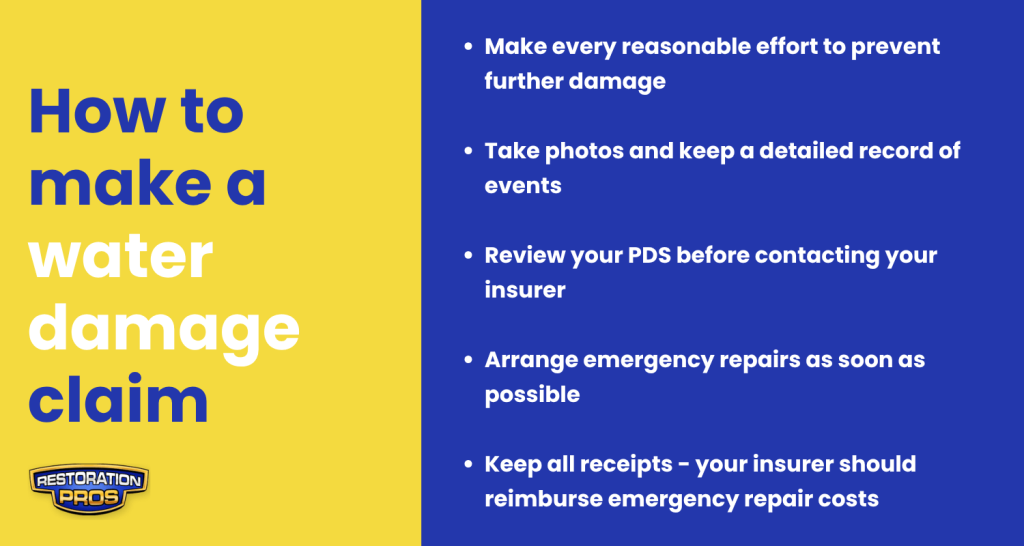
Depending on your insurer, you may be looking to make a claim for water damage. Below is a step-by-step guide that you can follow for making a claim for water damage on your home insurance policy.
Prevent further damage: First things first, if it is safe for you to do so, you should make every reasonable effort to ensure that further damage does not occur. That might mean contacting an emergency roofer to “patch” the roof, shutting off water mains to prevent damage from a burst pipe, or disconnecting a broken appliance. As long as it is safe to do so, you should make an effort to mitigate any further damage to your property.
Keep a record: Just like you would if you were involved in a car crash, it’s important to take photos and keep a detailed record of events to provide to the insurance company. The more accurate and methodical you can be in preparing your supporting evidence, the smoother the claims process will run.
Contact your insurer: Get in touch with your insurer to let them know about any damage. Make sure that you have reviewed your PDS ahead of your call to ensure that you are aware of your inclusions and level of coverage.
Arrange emergency repairs (where required): Most of us will never go through the claims process (touch wood), so there are some misconceptions about how the process actually works. You should not wait for your insurer to deposit money into your account before arranging emergency repairs. Whether that’s a plumber, roofer, or water damage restoration company, it’s important to arrange emergency repairs as soon as possible to mitigate further damage. Keep all receipts as your insurer should (again, check your PDS) reimburse your expenses for any emergency repairs.
Final thoughts
Most home insurance policies will hold some level of coverage for water damage. Your exact level of coverage will depend on your policy. If you’re concerned about your coverage, it’s important to review and adjust your policy accordingly ahead of time.


Contact Us